
A wallet can be non-custodial and still leave its user poorly informed. That is the counterintuitive problem at the centre of modern DeFi: controlling the private key is not the same as understanding what a signed transaction will do. Rabby Wallet approaches this gap by treating the wallet less like a passive key holder and more like a transaction review layer for Ethereum and other EVM networks. For users searching for “rabby wallet herunterladen” in Germany, the important question is therefore not simply where to install it. It is how its simulation, warnings, network handling, and signing model change the decisions made before a transaction becomes irreversible.
Rabby is a non-custodial wallet developed by DeBank for DeFi users. Private keys remain locally on the user’s device rather than being sent to Rabby’s servers. The software is available primarily as a browser extension for Chrome, Brave, and Edge, with desktop and mobile versions also available. This structure gives the user control, but it also preserves the central responsibility of self-custody: a warning system can identify risk signals, yet it cannot replace careful review, secure devices, or sensible permission management.
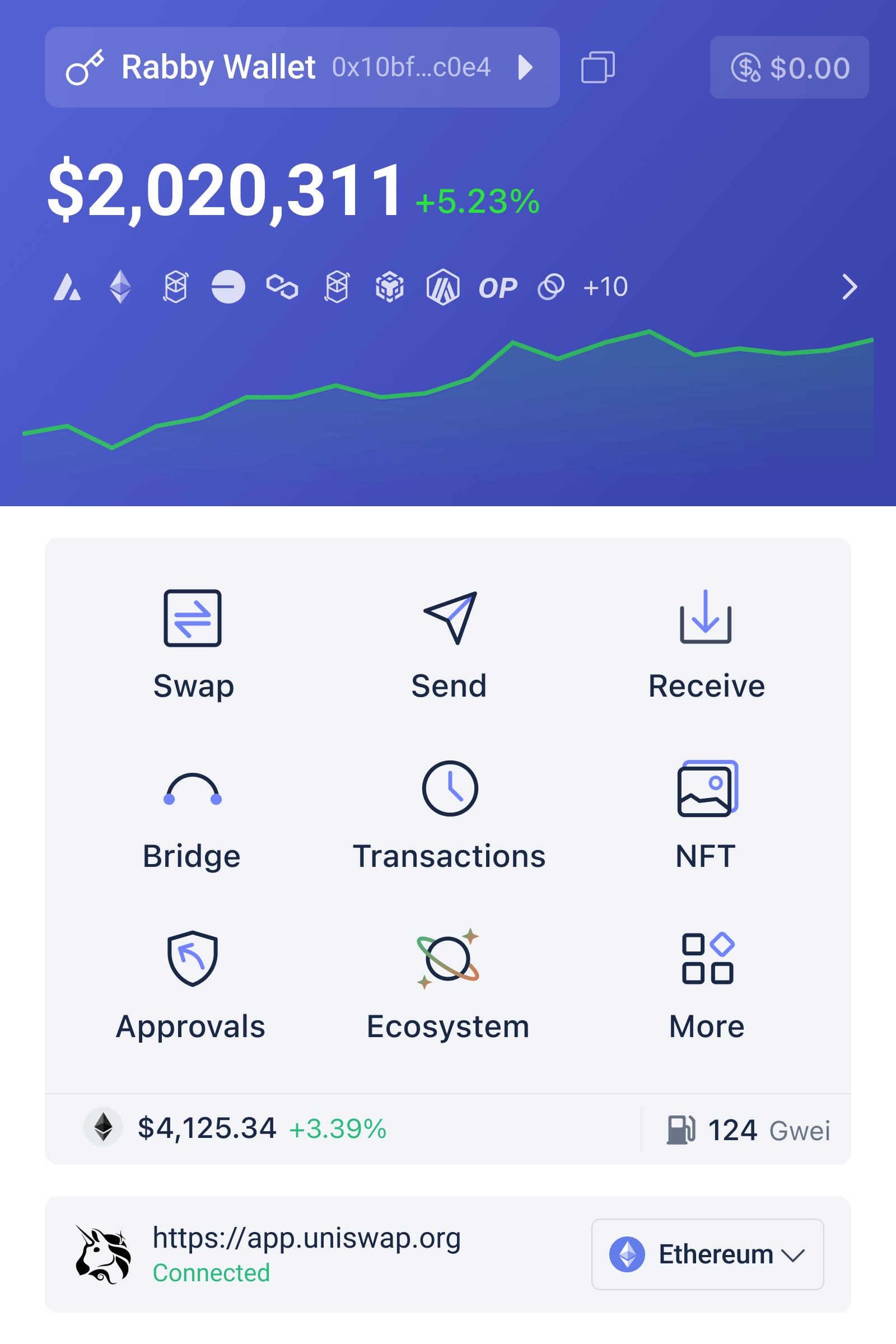
From single-chain wallets to transaction-aware interfaces
Early crypto wallets were often designed around a relatively simple model: select an account, choose a network, enter an address, and approve a transfer. DeFi made that model increasingly fragile. A single interaction might involve a smart contract, token approvals, a swap, a bridge, and several state changes across different protocols. The wallet is no longer merely sending an asset from one address to another. It is authorising code to act on the user’s behalf.
Rabby’s design responds to this evolution. It supports more than 140 EVM-compatible blockchains and networks, including Ethereum, Polygon, Arbitrum, Optimism, Avalanche, Base, and BNB Chain. When a decentralised application, or dApp, requests a connection, Rabby can detect the required network and switch to it automatically. This reduces a familiar source of user error: submitting an otherwise valid transaction on the wrong chain or believing that an asset visible on one network is immediately usable on another.
Automatic network switching is convenient, but convenience should not be confused with economic interoperability. A token on Arbitrum and a token with the same symbol on Ethereum are not interchangeable simply because both appear in the same wallet. Their contract addresses, liquidity, fees, and bridge routes may differ. The sharper mental model is that Rabby organises access to many execution environments; it does not erase the boundaries between those environments.
The project’s recent public positioning describes Rabby as a broad Ethereum and EVM wallet for activity across Web3. That message is consistent with the category’s historical direction: as users moved from one dominant network to rollups, sidechains, app-specific environments, and alternative EVM chains, reducing network friction became a meaningful usability objective. The unresolved question is whether a smoother interface can make complexity safer, rather than merely making complex actions faster to approve.
Transaction simulation as a pre-signing safety layer
The most educationally important feature is transaction simulation. Before the user signs, Rabby simulates the proposed action and presents expected changes to token balances. In practical terms, this can help answer questions that a raw hexadecimal transaction cannot: Which tokens may leave the wallet? Which assets are expected to arrive? Is the action a swap, an approval, a contract interaction, or a combination of these?
This matters because the transaction request shown by a dApp may describe an instruction rather than its full economic consequence. For example, an “approval” may allow a contract to spend a token later, while a swap may involve multiple contract calls and a variable amount received. A simulation makes the expected state transition more visible. It shifts the user’s attention from “Does this website look familiar?” to “Do these proposed balance changes match the action I intended?” That is a substantially better security question.
Rabby also includes a security engine that checks contracts and addresses for signals associated with phishing, known exploits, and unlimited token approvals, often called infinite approvals. These warnings are valuable because they combine technical information with context at the moment of signing. The wallet’s open-source architecture, released under the MIT licence, also allows community members to inspect the software. Yet neither open source nor simulation proves that every interaction is safe. A previously unseen exploit may not be recognised, a malicious application may behave differently under conditions not captured by a simulation, and a user may approve a warning after misunderstanding it.
This is the key boundary condition: simulation is evidence about an expected execution, not an insurance policy. It depends on the accuracy of the underlying state, the ability to model the relevant contracts, and the assumption that the transaction being signed corresponds to the transaction that was reviewed. Users should still verify the domain, contract address, network, recipient, token amounts, and approval scope. For larger balances, separating daily-use accounts from long-term holdings remains a sensible operational control.
Bridges, swaps, and the cost of convenience
Rabby brings several DeFi actions into the wallet interface. Its swap aggregator can scan venues such as Uniswap and 1inch to compare routes, rates, and expected slippage. It also integrates bridge protocols such as LI.FI, allowing users to move assets between supported networks from within the same interface. A Gas Account feature may allow network fees to be paid with stablecoins such as USDC, including when the user lacks the native gas token for a particular chain.
These functions solve genuine usability problems. A user does not need to maintain a small balance of every native token merely to perform routine actions, and route aggregation can reduce the need to compare several interfaces manually. For users in Germany who are already managing positions across Ethereum, rollups, and other EVM networks, this consolidation can reduce operational friction and the number of browser sessions involved in a trade.
But aggregation also compresses several risks into one screen. Bridge security depends on the bridge architecture and the route selected. A favourable quoted rate may be offset by slippage, liquidity limits, fees, or execution risk. Paying gas in a stablecoin changes the user experience, not the underlying need for a functioning fee mechanism and a reliable service path. The practical rule is simple: use the interface to compare and inspect, not to outsource judgment. The more components a route contains, the more important it becomes to examine the complete simulation and the final received amount.
Independence, hardware signing, and the limits of trust
Rabby’s core signing functions are designed to remain usable even if Rabby’s servers become unavailable, because the wallet does not itself create or alter the user’s transactions. It acts as an independent reviewer and signing interface. This distinction is easy to miss. A wallet provider may offer scanning, routing, and display services without possessing the private key or controlling the blockchain account.
That independence does not mean the wallet is independent of every external dependency. dApps, RPC providers, bridge systems, price sources, simulation infrastructure, and blockchains all influence what the user sees and how an action executes. Rabby can make these dependencies more legible, but it cannot remove them. Users who want a stronger security boundary can connect hardware wallets such as Ledger, Trezor, or OneKey. In that setup, Rabby can provide the interface and analysis while the hardware device keeps the signing secret in a more isolated environment.
Rabby Points, earned through activities such as swaps, gas top-ups, or referrals, introduce a different consideration. Loyalty incentives may encourage engagement, but they should not determine whether a transaction is economically sensible. A reward programme cannot compensate for poor execution, excessive approvals, bridge exposure, or unnecessary trading. Treat points as a secondary feature rather than a reason to increase activity.
A practical decision framework for DeFi users
Before installing a wallet extension, verify that the distribution channel and application identity are correct; phishing copies are a persistent risk across crypto software. The provided rabby wallet extension resource can help readers orient themselves around the extension topic, but installation should still be approached with the same caution used for any security-sensitive software. Back up the recovery phrase offline, never share it, and avoid storing it in screenshots, cloud notes, or chat applications.
For routine transactions, a useful four-part check is: first, confirm the network; second, identify the contract or recipient; third, read the simulated balance changes; and fourth, inspect approvals and slippage. If any of these answers is unclear, pause rather than treating the wallet’s green or reassuring presentation as permission to proceed. For high-value activity, use a hardware wallet and consider a test transaction. This framework remains useful even when changing between Rabby, MetaMask, or another EVM-compatible wallet because it focuses on transaction meaning rather than brand preference.
What should users watch next? The likely direction of multi-chain wallets is deeper abstraction: fewer manual network choices, more route selection, and increasingly detailed pre-execution explanations. If those tools become more accurate without hiding uncertainty, they could improve user decision-making. If they make complex routes appear effortless while suppressing assumptions and failure modes, they could increase the scale of mistakes. The meaningful benchmark is therefore not the number of supported chains, but whether the interface helps users understand what they are authorising.
Frequently asked questions
Is Rabby Wallet custodial?
No. Rabby is designed as a non-custodial wallet, and private keys are stored locally on the user’s device rather than transmitted to Rabby’s servers. The user remains responsible for protecting the recovery phrase and securing the device.
Does transaction simulation guarantee that a DeFi transaction is safe?
No. Simulation shows the expected effects of a transaction under the conditions available to the review system. It can reveal suspicious balance changes or approval patterns, but it cannot guarantee that a contract is honest, that a bridge is secure, or that future protocol behaviour will match the simulation. It should be combined with domain verification, contract review, sensible approval limits, and hardware signing for significant funds.
Why is Rabby useful for users active on several EVM chains?
It brings broad EVM support, automatic network switching, cross-chain tools, simulation, and security warnings into one interface. Its advantage is reduced operational friction. Its limitation is that the underlying differences between chains, contracts, liquidity venues, and bridge systems still exist and must be understood.